
How Cardio MedBed Works: The Science Behind External Counterpulsation
How Cardio MedBed Works: The Science Behind External Counterpulsation
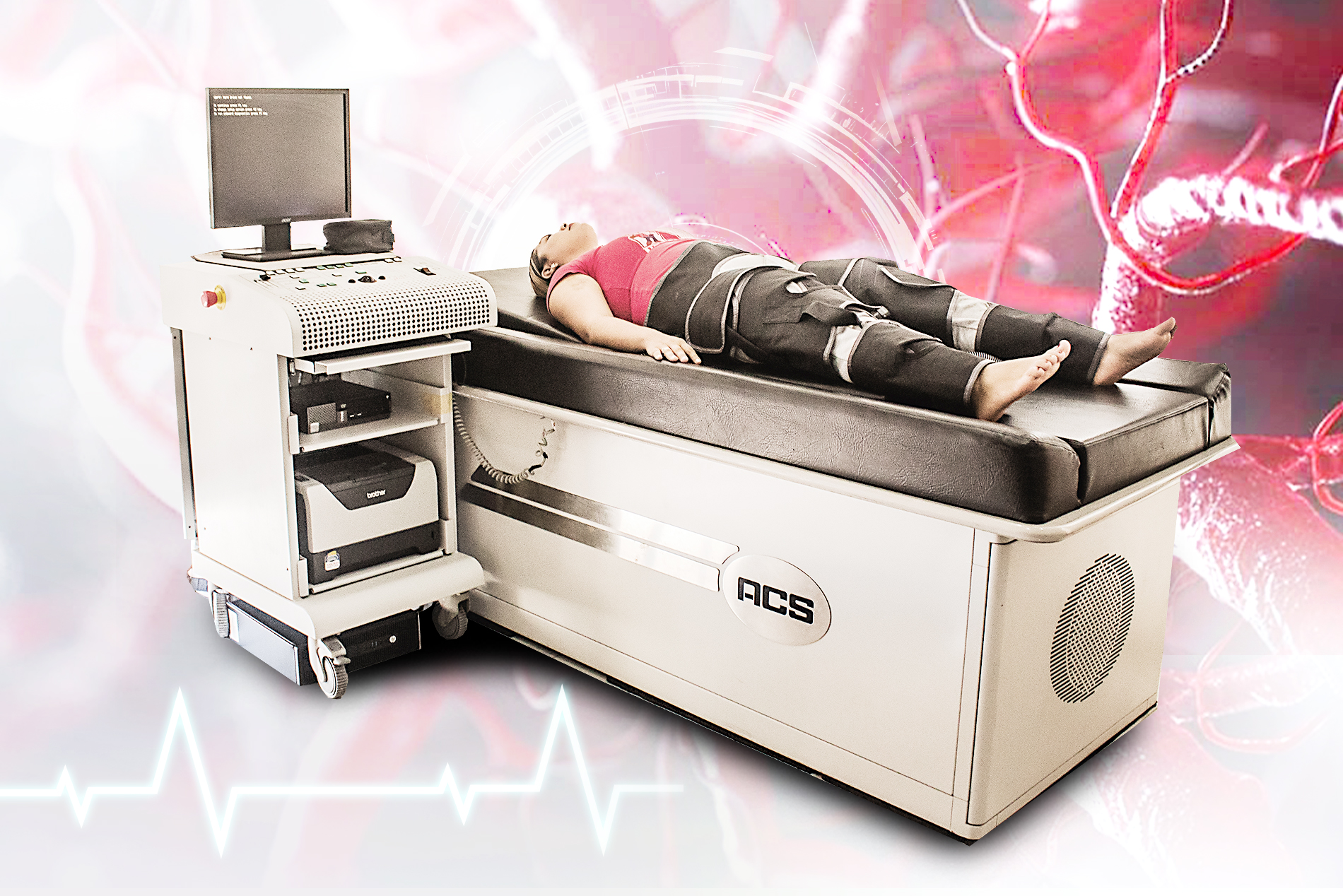
External Counterpulsation (EECP) is a modern non-invasive therapy that synchronizes with the heartbeat and uses cyclical pressure changes to improve blood flow throughout the body. The core idea is simple: support the heart at the exact moment it needs it most, while reducing the workload before the next blood ejection. EECP has become a breakthrough in cardiac rehabilitation, and its advanced version — the Cardio MedBed system — takes this therapy to a new level of efficiency, stability, and patient comfort.
Below, we explore the mechanics of EECP, the physiological logic behind it, and why Cardio MedBed is considered the next generation of external counterpulsation.
What Is EECP and Why Is It Beneficial?
EECP — External Enhanced Counterpulsation — is a specialized therapy in which the patient lies on a table while large pneumatic cuffs are placed on the legs and lower abdomen. These cuffs synchronize with the patient’s ECG and inflate during diastole — the phase when the heart relaxes and receives blood. They then deflate instantly before systole, when the heart pumps blood out.
This produces two core therapeutic effects:
- Enhanced coronary perfusion during diastole
- Reduced vascular resistance during systole
It works like a gentle “assist pump” beside your heart — boosting blood flow at the perfect moment and easing the heart’s workload.
Step-by-Step Mechanics of the EECP Cycle
To fully understand how Cardio MedBed works, it is useful to break down each phase of a treatment cycle.
Stage 1. Cuff Inflation During Diastole
Diastole is the phase when the heart relaxes and fills with blood. At this moment, Cardio MedBed:
- sequentially inflates cuffs from calves → thighs → lower abdomen
- creates a controlled upward pressure wave
- directs additional blood volume back toward the heart via the aorta
Scientific meaning of this phase:
- coronary arteries receive maximum perfusion during diastole
- cuff pressure increases coronary filling, boosting oxygen and nutrient delivery
- patients with ischemia, angina, or heart failure benefit from the “assisted inflow”
Imagine a rising wave moving from the legs toward the heart, catching the diastolic moment and amplifying it.
Stage 2. Instant Pressure Release Before Systole
Systole is the contraction phase when the heart ejects blood. Just before this occurs, Cardio MedBed rapidly deflates all cuffs.
This sudden drop in pressure creates the phenomenon known as afterload reduction.
In simple terms:
- the heart faces less resistance when pumping blood
- peripheral arterial pressure decreases
- workload on the left ventricle is reduced
- myocardial oxygen demand drops
This is why EECP is often described as a non-invasive analogue of an intra-aortic balloon pump.
Stage 3. Improved Venous Return + Collateral Vessel Formation
The pressure gradients created by the cuffs promote:
- faster venous return to the heart
- reduced venous pooling in the legs
- improved systemic circulation
- increased shear stress — the tangential force that stimulates vascular remodeling
Shear stress is the key trigger for the creation of collateral vessels, the small “bypass routes” that help supply blood around narrowed or blocked arteries.
What Happens Inside the Coronary Arteries During EECP?
EECP is not merely a temporary “boost” to circulation — it initiates deep vascular remodeling.
1. Increase in Shear Stress
Higher shear stress:
- activates endothelial cells
- improves vascular tone regulation
- stimulates nitric oxide synthesis
2. Nitric Oxide (NO) Production
NO is one of the body’s most important vasodilators. Increased NO:
- improves vessel elasticity
- reduces spasms
- normalizes blood pressure
- enhances microcirculation
3. Angiogenesis
Higher perfusion → more oxygen → activation of growth factors → formation of new capillaries.
4. Collateralization
One of the most valuable long-term effects:
Patients with coronary artery disease may develop natural “detour routes” around stenotic segments — reducing ischemia and improving exercise tolerance.
Long-Term Physiological Benefits After an EECP Course
EECP produces not only immediate improvements, but also durable cardiovascular adaptations.
Improved Endothelial Function
Vessels become:
- more flexible
- healthier
- less prone to inflammation and spasms
Normalized Blood Pressure
Continuous NO stimulation stabilizes vascular tone.
Improved Oxygen Metabolism
Each heartbeat becomes more efficient — delivering more oxygen with less effort.
Reduced Cardiac Workload
EECP decreases myocardial oxygen demand and reduces strain on the left ventricle, which is crucial for patients with chronic ischemia or heart failure.
How Cardio MedBed Differs from Classic EECP Systems
Modern Cardio MedBed technology elevates external counterpulsation far beyond traditional devices.
1. More Precise Heartbeat Synchronization
Advanced R-wave analysis algorithms:
- reduce timing delays
- improve inflation accuracy
- enhance safety for patients with arrhythmias
2. More Stable Pressure Gradient
Improved compressors and real-time pressure control create a consistent, predictable waveform.
This results in:
- higher shear stress
- stronger collateral stimulation
3. More Comfortable Cuffs
New materials:
- reduce discomfort
- better conform to anatomy
- prevent pain during long sessions
Classic EECP can sometimes be physically unpleasant — Cardio MedBed solves this.
4. Stronger Diastolic Augmentation
Thanks to superior timing, Cardio MedBed produces a more powerful diastolic pressure wave that:
- increases coronary artery filling
- boosts perfusion pressure
- improves clinical outcomes
5. Better Tolerance for Elderly Patients
Patients 60+ often have sensitive vascular systems. Cardio MedBed:
- starts cycles more gently
adapts to vascular tone
minimizes bruising and discomfort
Cardio MedBed as a “Supportive Pump” for the Heart
External Counterpulsation is one of the most intelligent medical technologies of the 21st century — not disrupting physiology, but enhancing the body’s natural mechanisms. Cardio MedBed makes EECP even more accurate, comfortable, and effective.
It functions like a temporary “support pump” that takes part of the heart’s workload, allowing it to rest, recover, and receive more blood precisely when it needs it most.
This is the future of non-invasive cardiac therapy — no surgery, no stents, no long recovery — but with meaningful, measurable improvements in vascular function, microcirculation, and long-term heart health.
FAQ Questions for SEO:
- How does EECP therapy work? EECP uses pneumatic cuffs around the legs that inflate during diastole (heart's resting phase) to increase blood flow to coronary arteries, then deflate before systole to reduce resistance when the heart contracts. This creates effects similar to an intra-aortic balloon pump but completely non-invasively.
- What is the science behind EECP treatment? EECP works through diastolic augmentation and systolic unloading. Research shows it increases shear stress in blood vessels, stimulating nitric oxide production (62% increase) and improving endothelial function. It may also promote vascular remodeling, though the extent remains under investigation.
- How many EECP sessions are needed and how long do they last? Standard EECP treatment consists of 35 one-hour sessions administered over 7 weeks (5 sessions per week). Studies show benefits can last 6-12 months to several years, though individual responses vary significantly.
- Are all EECP devices the same? All FDA-approved EECP devices work on the same therapeutic principle—diastolic augmentation and systolic unloading. While different manufacturers may offer varying comfort features and designs, the fundamental mechanism remains consistent. No published studies compare clinical outcomes between specific EECP brands.
KEY STUDY REFERENCES
- Mechanisms of EECP - JACC Review (2003) https://www.jacc.org/doi/10.1016/S0735-1097(03)00428-5
- EECP Effects on Nitric Oxide and Endothelin (2006) https://pubmed.ncbi.nlm.nih.gov/16784915/
- EECP Mechanisms - PMC Analysis (2012) https://pmc.ncbi.nlm.nih.gov/articles/PMC3383356/